
With VIVE Eagle smart glasses, you can use Lumyeye Pro without picking up your phone: press, ask, and listen.
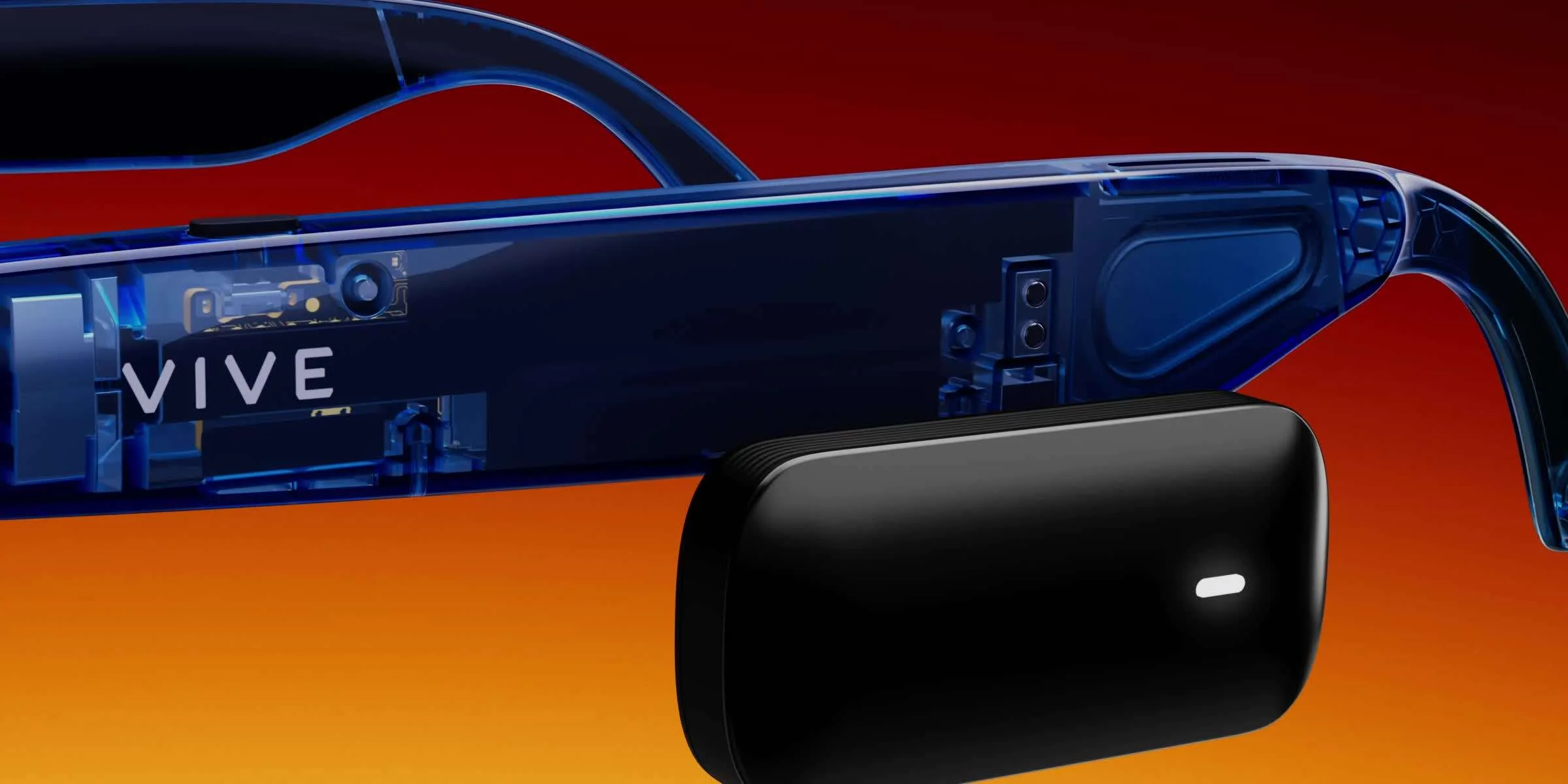
For a blind or low-vision person, real progress is not adding another screen. It is removing a step. Lumyeye Pro on iPhone and Android now does exactly that through its integration with VIVE Eagle smart glasses.
The promise is practical: the smartphone remains asleep in a pocket and both hands remain available. You call up Lumyeye Pro from the glasses, speak naturally, and hear the answer without finding your phone, unlocking it, or navigating an interface.
Why does hands-free access matter so much?
Holding a phone is rarely an isolated action. You may need to keep a white cane in one hand and a railing in the other, carry a bag, follow a wall, or stay balanced on public transportation. Every time the phone can stay put, one more physical constraint disappears.
The glasses also place the camera at eye level. For compatible visual requests, the viewpoint naturally follows your head. Reading information, describing what is in front of you, or identifying an object no longer has to begin with taking out and positioning a smartphone.
One physical button on the left temple.
VIVE placed its AI button on the left temple. Lumyeye Pro uses that physical contact point to preserve the simple rhythm at the heart of the app:
- Press to start listening.
- Ask in your own words.
- Listen through the open-ear speakers.
- Press again to stop when needed.
Open-ear audio does not block the ear canal. You can hear the answer while remaining aware of surrounding sounds. That awareness remains essential: the glasses and AI provide information, never a guarantee of safety.
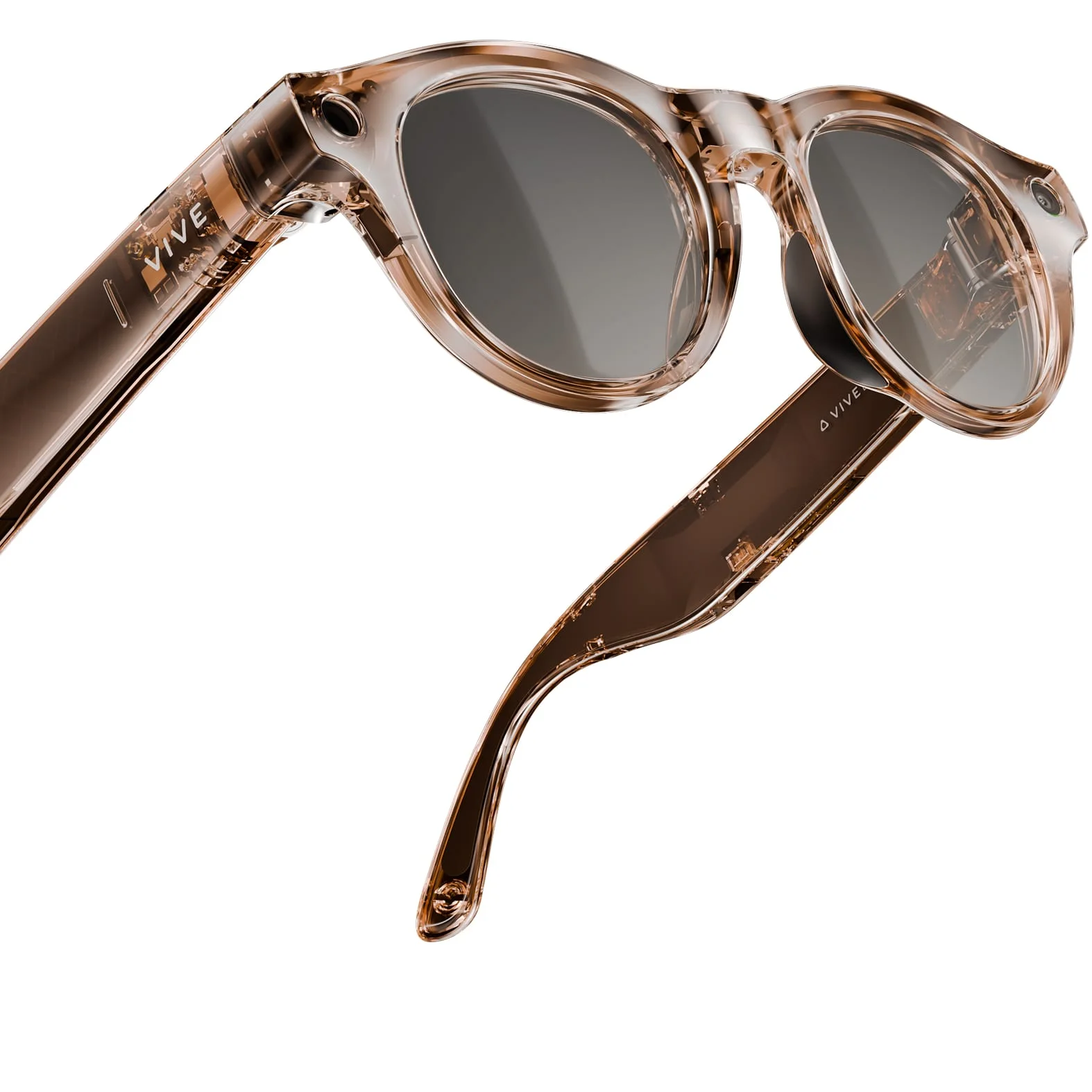
A lightweight frame, 12 MP camera, and IP54 protection.
According to specifications published by VIVE, Eagle frames start at 48.5 grams, or about 1.7 ounces. They include a 12-megapixel ultrawide camera that captures 3024 × 4032 photos and 3K video, as well as microphones and open-ear speakers.
The announced IP54 rating means protection from dust and splashing water under the conditions specified by the manufacturer. An LED indicates when the camera is in use. VIVE says capture is disabled when the glasses are removed or when that LED is covered.
Power Boost adds a battery directly to the glasses.
VIVE Eagle has a built-in 235 mAh battery. The manufacturer advertises more than 36 hours of standby time, up to 4.5 hours of music, and more than 3 hours of calls. Those are manufacturer benchmarks: battery life with Lumyeye Pro naturally depends on request frequency, camera use, network conditions, and audio volume.
For longer intensive use, the optional Power Boost adds 120 mAh. The small module weighs less than 8 grams, or roughly 0.3 ounces, attaches to the glasses, and can power them while they are being worn. The combined advertised capacity is 355 mAh.
Orders open September 3, with first deliveries announced for September 21.
VIVE Eagle orders open September 3, 2026, with first deliveries announced for September 21, 2026. The official VIVE page lists available frames, colors, lenses, retailers, and regional availability conditions.
View VIVE Eagle details and ordering options on the official website.
What to remember.
The technical sophistication matters, but it is not the conclusion. The conclusion fits in one sentence: with Lumyeye Pro, VIVE Eagle lets you ask and listen without taking your phone back out.
Like every system built on a camera, a network, and artificial intelligence, its answer can be incomplete or wrong. The setup complements existing mobility tools. It does not replace a white cane, a guide dog, orientation and mobility skills, or the user's judgment.